

The Department of Modern and Classical Languages, Literatures and Cultures offers a range of study-abroad options for each of our programs. Through standing agreements, Rice provides students with access to prestigious institutions and challenging courses in the European Union and across Latin America, such as SciencesPo in Paris and the University of Leipzig and Humboldt University Berlin in Germany. Studying abroad for a summer or a semester, or perhaps even for an entire year, is an invaluable and culturally immersive experience like no other. Our students regularly study in Germany and France, in Spain and across the Caribbean and Latin America, from Cuba and Mexico to Argentina and Brazil.
While students may organize their own study abroad experience, they often prefer one of the more structured options offered through our department. Each of these options is either run by Rice faculty or has been closely vetted by Rice. We also aim to make your study abroad experience as cost-neutral as possible. Depending on the individual program, we offer fellowships covering much of the cost of study abroad and we also help with any financial aid applications and procedures.
Below are some of the options available to our students. For any questions you might have, it is always best to contact the Program Advisor of your respective major.
Intercollegiate Center for Classical Studies at Rome
Students in the Classical Studies program are encouraged to study for a semester at the Intercollegiate Center for Classical Studies, which maintains programs in Rome. Courses in Greek and Latin at the intermediate and advanced levels are offered in both of these programs. Students in Rome are required to take at least one ancient language course. The centerpiece of the Rome program is the “City Course,” which is an introduction to the history, archaeology, and monuments of the city of Rome in antiquity. In this course students take weekly field trips to sites and museums in and around Rome plus extended trips to Sicily and the Bay of Naples area. For further information about both programs, including scholarships and other courses that are offered, please consult the Duke Overseas Studies website. Also, please contact Hilary Mackie for any additional questions you might have.
Study Abroad in Athens
In addition to Rome, Classical Studies also offers study abroad opportunities in Athens. Rice is a member organization of The American School of Classical Studies at Athens, and we also cooperate with the International Center for Hellenic & Mediterranean Studies. For additional information, please contact Harvey Yunis.
The Clyde Ferguson Bull Traveling Fellowship in French Studies
Ms. Clyde Ferguson Bull, a French major in the Class of 1926, endowed a fund that provides a fellowship for students to study in France or any country in which French is one of the official languages (e.g. Belgium, Morocco, Senegal, and many more), with a program approved by the French Studies program at Rice. The fellowship provides $12,000 per semester, $24,000 per year, or $6000 for a summer program. Rice financial aid will not be affected by this fellowship. Ideal candidates will be majors or minors in French Studies, as well as students whose academic and career goals will benefit from study abroad. We may offer a fellowship to several qualified candidates in any given period. Calls for applications are made every semester.
The Rebecca Elnekave Cassel Endowed Scholarship
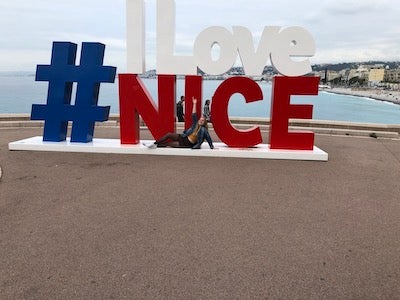
All Rice students have access to the Rebecca Elnekave Cassel Endowed Scholarship, which is administered by the Study Abroad Office. This scholarship is intended for students to travel to France or a Francophone country with an approved program to enhance their ability to function in French in their chosen field of study. For additional information and how to apply, please contact the Study Abroad Office.
The Leipzig Summer Fellowships
Through several generous endowments, the German Studies program offers the Leipzig Summer Fellowships. These fellowships allow students in the German Studies program, or German language students at Rice, to attend an eight-week, intensive summer language program at the University of Leipzig’s renowned Herder Institute. The fellowships are typically used for travel, housing, and tuition expenses in Leipzig. The fellowships are valued between $4,500 and $5,500 each. The courses students take in Leipzig count toward the requirements for the German Studies major (6 credit hours). Details about the Leipzig Summer Program, including information about housing, can be found here. For further information contact the Program Advisor for German Studies, Martin Blumenthal-Barby.

Study Abroad at the University of Leipzig or Humboldt University, Berlin
Rice University has standing exchange agreements with the University of Leipzig and with Humboldt University, Berlin. The University of Leipzig is one of the oldest universities in the world, founded in 1409, and counts many famous public figures among its alumni, including Goethe, Nietzsche, and Angela Merkel, but also Rice’s founding president, Edgar Odell Lovett, who completed a Ph.D. in mathematics at Leipzig. Rice students are in good company in Leipzig.
Humboldt University, founded in Berlin in 1809, remains one of the world’s leading research universities in the humanities and social sciences, but also in the life sciences and medical sciences. Among its alumni and faculty were the philosophers Hegel and Marx, but also the African American sociologist and civil rights activist W.E.B. DuBois and, of course, Albert Einstein and Max Planck.
Students interested in spending a full semester, or even a full academic year, at either the University of Leipzig or Humboldt University should contact the Program Advisor, Astrid Oesmann.
Study Abroad in the Caribbean and Latin America
Students in Latin American and Latinx Studies can spend at least one semester studying at a Rice-approved study abroad program in which the primary language of instruction is Spanish, Portuguese or, in some circumstances, French.
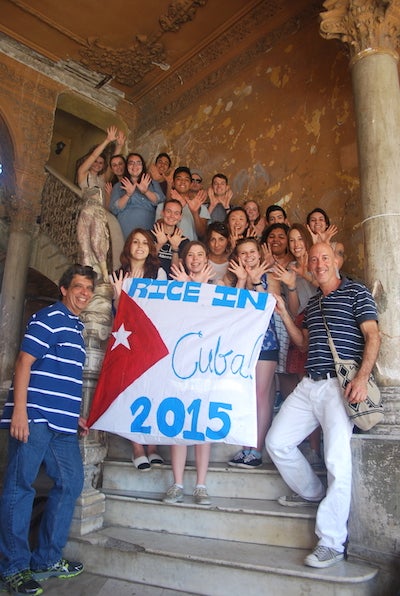
Since 2012, students have gone to Cuba, Mexico, Nicaragua, Costa Rica, Brazil, Chile, Peru, Argentina, and Ecuador.
Once students have identified a country and program for their study abroad semester, they will work with the Latin American and Latinx Studies Program Advisor to find the right courses at Rice to prepare them intellectually, including language courses in Spanish, Portuguese, or French. For additional details, please contact the Program Advisor for Latin American and Latinx Studies, Paula Park.
The Rice-Madrid Program
The Rice in Madrid Summer Program combines academic study, professional experience, and sustained cultural immersion in one of Europe’s major capitals. Through two integrated courses—Spanish Culture and Society and a Professional Internship in Spain—students examine the history, politics, arts, and social life of contemporary Spain while gaining first-hand experience in businesses, nonprofits, educational institutions, and cultural organizations.
Madrid is central to the academic experience. Coursework is reinforced through direct engagement with the city’s neighborhoods, museums, institutions, public spaces, and cultural life, allowing students to connect historical and social analysis with daily experience. Living with carefully selected Spanish host families further strengthens language proficiency, cultural fluency, independence, and meaningful engagement with local communities.
The program includes an extensive schedule of cultural activities, site visits, performances, workshops, and educational travel. Students visit institutions such as the Prado Museum and the Reina Sofía, attend theater and flamenco performances, participate in cooking workshops, explore Madrid through guided historical walks, and meet with Spanish scholars, artists, professionals, and community leaders.
Weekend excursions to Toledo, Segovia, Granada, El Escorial, and other significant sites broaden students’ understanding of Spain’s regional and historical diversity. These visits are fully integrated into the curriculum and provide opportunities to study, in context, the legacies of empire, religious coexistence, artistic innovation, historical memory, and democratic change.
The program has had a lasting impact on generations of participants. Students return with stronger
professional skills, greater cultural and linguistic confidence, and a deeper understanding of Spain and its place in Europe and the wider world. Many maintain academic and professional relationships established during the program and later return to Spain for graduate study, research,
internships, and employment.
By integrating serious academic work with professional experience and daily life in Madrid, the program gives students both intellectual depth and practical preparation for working across
cultures.
Interested students should contact Luis Duno-Gottberg.
Rice in Cuba Spring Break Program
Spring Break
The Rice in Cuba Spring Break Program offers students direct, sustained engagement with contemporary Cuban society through the course A Revolution from Within: Trends in Contemporary Cuban Culture. The program is designed to move beyond simplified accounts of Cuba by bringing students into contact with the people, institutions, cultural movements, and social debates that shape the country today.
Travel across the island is an essential part of the course. From Havana and Trinidad to Pinar del Río and Santiago de Cuba, students encounter distinct regional histories, cultural traditions, and social realities. The experience allows them to examine Cuba not as a single narrative, but as a complex society shaped by geography, history, political change, economic pressures, and cultural production.
A central strength of the program is the access it provides to Cuban intellectual and cultural life. Students meet with writers, artists, filmmakers, musicians, scholars, journalists, entrepreneurs, and community leaders through seminars, roundtable discussions, performances, studio visits, and extended conversations. These exchanges expose students to perspectives rarely available through conventional study abroad and allow them to engage directly with people actively participating in Cuba’s cultural and social life.
Visits to universities, museums, historical sites, cultural institutions, independent artistic projects, and community organizations reinforce the academic work. Students examine questions of race, identity, migration, religion, gender, economic change, environmental sustainability, artistic expression, and civil society through direct observation and discussion.
The program is intentionally intensive. Students travel together, study together, and engage in sustained dialogue with Cuban scholars and cultural figures throughout the experience. This structure creates a close intellectual community and encourages students to test assumptions, compare perspectives, and develop a more informed understanding of the country.
For many participants, the program becomes one of the most significant academic experiences of their undergraduate education. Relationships established with Cuban academics, artists, and institutions often continue beyond the course and have led to further research, graduate study, artistic collaboration, and professional engagement.
A Revolution from Within gives students the opportunity to study Cuba through direct contact with the people shaping its cultural and intellectual life. The result is a rigorous, highly focused program that challenges students to understand the country on its own terms and with greater historical, cultural, and analytical depth.
Interested students should contact Luis Duno-Gottberg.